Microsoft 365 is getting a price increase. Announced in December 2025 and effective July 1, 2026, the update affects a broad range of commercial, nonprofit, and government subscriptions, from Business Basic to Enterprise E5. It also introduces changes to the features includes in some plans.
Most organizations that move to the cloud do so expecting to save money. However, many end up spending more than anticipated, often without a clear explanation of why. The causes tend to be structural rather than accidental: patterns in how cloud services are procured, deployed, and managed that create waste at every layer.
Customer data is the engine behind better products, sharper marketing, and stronger business decisions. But how a business collects and protects that data has become as important as the data itself. Privacy regulations are tightening, customers are paying closer attention, and the consequences of getting it wrong have never been more significant.
Android phones ship with a lot of features that most people never discover. Some are tucked into settings menus, some are disabled by default, and some have been available for years without ever getting the attention they deserve.
Moving from a Windows PC to a Mac involves more than getting used to a new operating system. It also means bringing your files, applications, contacts, and account settings along with you. To make that process as seamless as possible, Apple created Windows Migration Assistant, a purpose-built tool that handles the heavy lifting, so you don’t have to move files one by one or rebuild your settings from scratch.
Microsoft’s monthly Windows 11 updates are typically straightforward: you install them and move on. However, the July 2026 Security Update, which began rolling out on July 14 for Windows 11 versions 24H2 and 25H2, is worth a closer look.
Every business website needs somewhere to live. Web hosting is the infrastructure that makes that possible — the servers, storage, and software that keep your site accessible around the clock. Choosing the wrong type of hosting doesn’t just cost money; it can slow your site down, limit your ability to grow, and leave you scrambling when traffic spikes.
Most cybersecurity tools are built around a simple assumption: malicious software leaves files behind. Fileless malware is designed specifically to defeat that assumption. Rather than dropping a suspicious executable onto a hard drive, it operates entirely in memory, using your system’s own trusted tools against you, and leaving little to nothing for a traditional antivirus scanner to find.
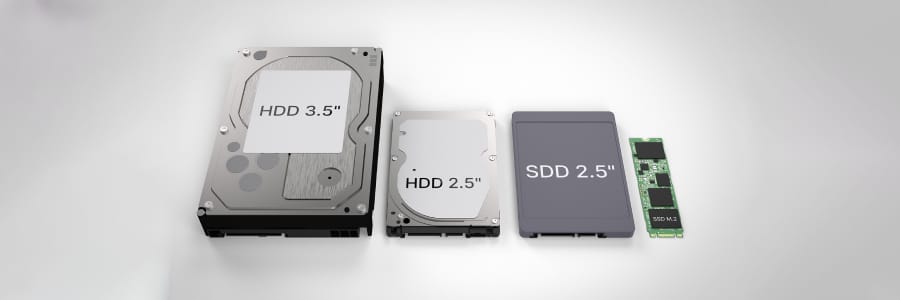
Corporate hardware decisions require balancing daily operating speeds against long-term data preservation requirements. Evaluating the fundamental mechanics of your storage hardware allows you to maximize office productivity while controlling budget expenses.
“We should move to the cloud” and “we should virtualize our servers” often get treated as the same conversation, but they’re solving different problems. One is about who owns and manages your infrastructure, while the other is about how efficiently you use the hardware you’ve already got.